Did you green out — or is it something more?
Seven quick questions to sort a classic green-out from an edible that hasn't peaked yet — or a recurring pattern worth taking seriously. Answers stay on your device; nothing is stored or sent.
What greening out means
Taking enough THC that the experience tips from high into sick: spinning, nausea, sweating, anxiety, sometimes vomiting or briefly passing out. Named for the color people turn.
Other names for the same thing: "greened out," "whiting out" (from going pale), or just "too high." Medically it is acute cannabis intoxication — an overdose in the literal sense of "more than your dose," but not in the lethal sense the word usually implies.
It can happen to anyone, but the classic setups are new or occasional users, high-potency products, edibles taken on the "it's not working yet" logic, and mixing weed with alcohol.
What it feels like
The classic green-out is some mix of the following, hitting fast:
- The spins — the room tilting, especially with eyes closed.
- Nausea and vomiting — often the main event.
- Going pale and sweating cold — THC can drop your blood pressure; this is where fainting comes from.
- Racing or pounding heart — uncomfortable but expected; THC temporarily raises heart rate.
- Anxiety and dread — a too-strong high plus a pounding heart convinces many people something is medically wrong, which feeds the spiral.
- Fatigue — most green-outs end in deep sleep.
From the outside it looks like: a friend who suddenly goes quiet and gray, says they need to lie down, maybe throws up, then sleeps it off.
How long it lasts
Smoked or vaped: the worst passes in 20–90 minutes and you're mostly done within 1–4 hours. Edibles: settle in for 6–12 hours, in waves.
| How you took it | Peak hits | Mostly over by |
|---|---|---|
| Smoked / vaped flower | Within 30 minutes | 1–4 hours |
| Dabs / concentrates | Within 30 minutes | 2–6 hours |
| Edibles | 2–4 hours after eating | 6–12 hours |
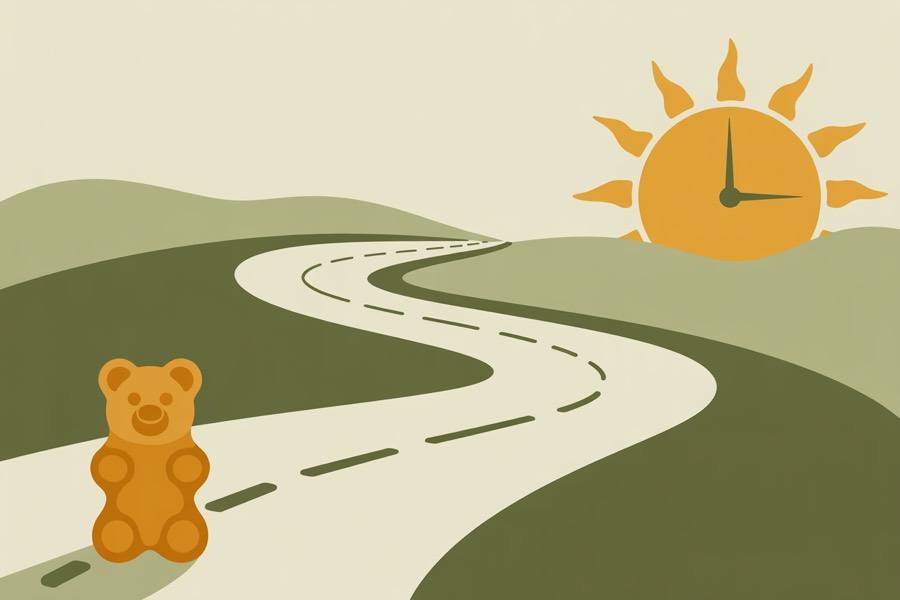
Edibles run long because your liver converts THC into 11-hydroxy-THC — a stronger, longer-lasting form. That delay is also why edible green-outs happen: nothing at 45 minutes, someone takes a second dose, and both arrive at once.
Sleep genuinely helps — most people wake up groggy but fine. Symptoms that are still going strong after a full day, or that keep coming back across weeks, are not a green-out — see the CHS section below.
What to do right now
You can't speed up your liver, but you can make the next few hours much easier:
- Stop consuming. Nothing else tonight, including "a little to take the edge off."
- Get somewhere calm and sit or lie down. Fainting is the main injury risk — don't stand and tough it out.
- Sip water, add sugar. Juice or a sugary soda helps with the shaky, low-blood-sugar feeling.
- Breathe slow. In 4, hold 4, out 8. It flattens the panic loop feeding the nausea.
- Eat something bland if you can manage it — crackers count.
- Remind yourself it passes. No one has a "weed hangover ward." You will feel silly about this tomorrow, which is the good outcome.
- Don't drive. Not "once the spins stop" — not tonight.
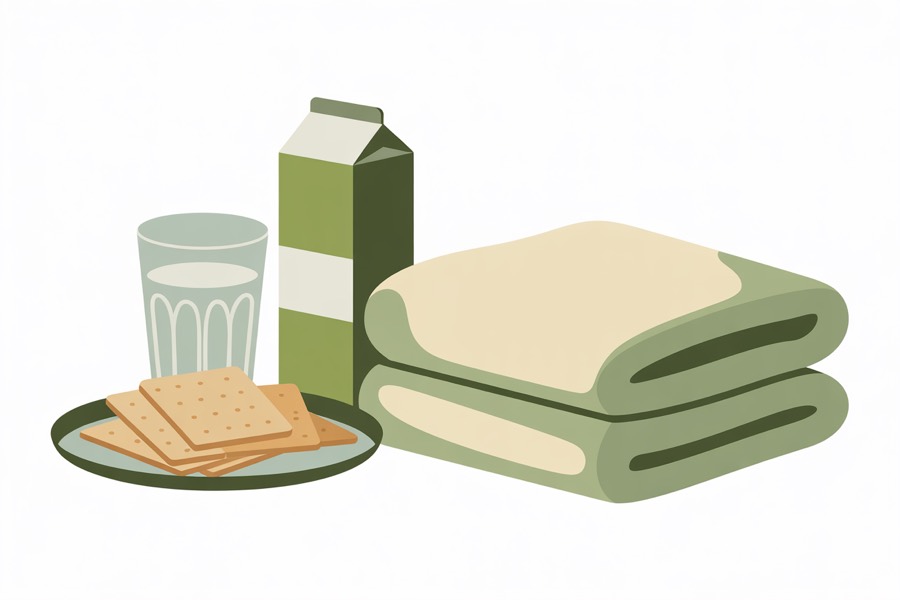
Helping a friend: keep them seated or lying on their side (especially if they're nauseous and drowsy — you do not want them on their back if they vomit), keep them talking, water in small sips. The black-pepper-sniffing trick is stoner folklore with a plausible terpene story but no real evidence — water, calm, and time are what actually work.
Can you die from greening out?
There are no confirmed reports of a healthy adult dying from a cannabis overdose alone. The dose required is far beyond what smoking or normal edibles deliver.
The honest version of the risk picture:
- The real dangers are indirect — falling when you faint, choking on vomit while passed out on your back, or getting behind a wheel.
- Mixing with alcohol multiplies everything. Drinking before smoking raises blood THC levels, and "crossfaded" green-outs are reliably the worst ones — more spinning, more vomiting.
- Heart conditions deserve caution. THC raises heart rate and shifts blood pressure; people with cardiac issues have a lower margin.
- Kids and pets are different. A toddler or dog that eats edibles needs poison control or a vet immediately (US Poison Control: 1-800-222-1222) — this page is about adults.
Scary, yes. Lethal, no — with the caveats above taken seriously.
How to not green out again
Nearly every green-out traces back to one of four mistakes — all avoidable:
- Start low, go slow. With edibles, 2.5–5 mg THC is a real starting dose, and the second dose waits 2 full hours, minimum. "I don't feel anything yet" is exactly how it gets you.
- Respect modern potency. Today's flower commonly runs 20%+ THC and concentrates far higher — a 2005-sized session is a very different chemical event now.
- Don't stack it on alcohol. If you're drinking, halve what you'd smoke — or skip it.
- Eat and hydrate first. Empty-stomach highs hit harder and drop blood pressure further.
Tolerance shifts too — after a break, your old dose is too big. Treat every return like a first date with a lower dose.
Greening out vs. CHS — when it's something more
A green-out is one bad session. If severe vomiting keeps coming back over weeks and months, that pattern has a different name: cannabinoid hyperemesis syndrome (CHS).
| Greening out | CHS | |
|---|---|---|
| Who | Anyone, often newer users | Long-term daily / near-daily users |
| When | During or right after one session | Recurring episodes, often mornings |
| Pattern | One-off, passes in hours | Comes back for 24–48h waves over months |
| Tell | Tied to an obvious big dose | Hot showers relieve the nausea |
| Fix | Time, water, sleep, smaller doses | Stopping THC entirely |
If the right-hand column reads like your life — daily use, repeated vomiting episodes, and you've discovered hot showers are the only relief — take the CHS self-check at whatisscromiting.com. It's the same 60-second format as the quiz here.
Frequently asked questions
Is greening out real, or just being a lightweight?
Real, common, and dose-driven. THC measurably drops blood pressure, raises heart rate, and at high doses triggers nausea and anxiety in most humans. Tolerance changes the threshold, not the physiology — heavy users green out too, usually via dabs or stacked edibles.
Can greening out last for days?
The acute misery shouldn't. Feeling foggy, off, or queasy the next day after a heavy edible happens, but active vomiting or spins beyond ~24 hours means it's time to involve a doctor — and if severe nausea keeps recurring across weeks in a regular user, read our CHS section.
Does throwing up help?
If there's recently-eaten edible still in your stomach, vomiting can reduce what gets absorbed. Beyond that it won't shorten the high — THC is already in your bloodstream. Don't force it; do stay on your side if you're drowsy and nauseous.
Does CBD cancel out THC?
Mixed evidence. Some studies suggest CBD softens THC anxiety; others show little effect at realistic doses. Don't count on it as a rescue — water, calm, and time are the reliable tools.
Why do edibles green people out so much more?
Delayed onset plus liver conversion. Nothing happens for 45–90 minutes, people re-dose, then both doses land as 11-hydroxy-THC — a stronger, longer-lasting form. It's the single most common green-out story.
Will I be OK tomorrow?
Almost certainly. Expect grogginess, maybe a dull headache and a tender stomach — a weed hangover is real but mild. Rehydrate, eat normally, and skip THC for a few days. If you still feel actively sick after a full day, check in with a doctor.
Sources
This page was fact-checked against the following sources on 2026-07-18:
- CDC — Cannabis and Public Health: health effects — acute effects, poisoning, mixing with alcohol
- NIDA — Cannabis (Marijuana) research overview — THC effects, potency trends, overdose context
- Healthline — What Really Happens When You Mix Alcohol and Weed? — greening out symptoms; why alcohol makes it worse
- Healthline — How Long Do Edibles Take to Kick In? — edible onset, peak, and duration
- StatPearls (NCBI Bookshelf) — Cannabis Toxicity — clinical picture of acute cannabis intoxication
- JAMA (2024) — Cannabinoid Hyperemesis Syndrome review — the recurring-vomiting condition covered in the CHS section